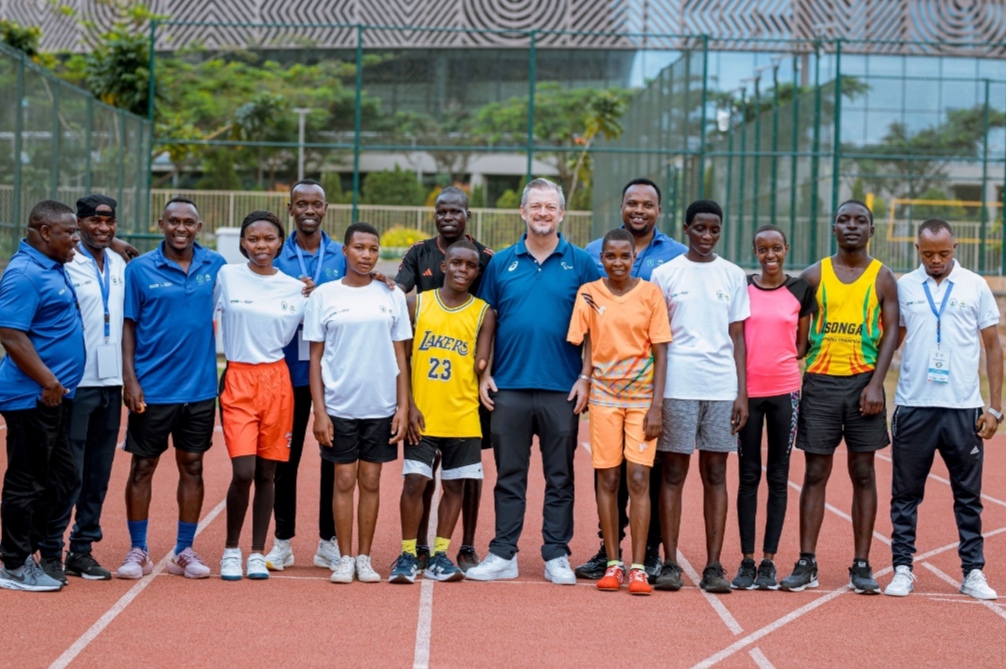
"VAN" (Sports Desk - 20.10.2026) :: As part of its commitment to advancing Para sport development across Africa, the National Paralympic Committee (NPC) of Rwanda hosted a seven-day long Para athletics training camp in Kigali benefitting 30 Para athletes, coaches and officials from six neighbouring countries.
Participants from Burundi, DR Congo, Somalia, South Sudan, Tanzania and Uganda took part in NPC Rwanda’s Regional Para Athletics Mentoring Training programme, which combined athlete development, classification education and opportunities, and mentoring for coaches and technical personnel.
Following the training camp, participants took part in the 2026/2027 Rwanda Para Athletics National Championships providing them an opportunity to apply the skills and knowledge gained.
The training camp was delivered by NPC Rwanda with support from the International Paralympic Committee’s (IPC) Sport for Mobility programme. Through the provision of grant funding to the NPC to host the Mentoring Hub, the IPC sought to strengthen existing expertise and capacity within Africa, recognising the knowledge, experience and leadership already present across the continent. By creating opportunities for knowledge exchange, skills development and collaboration, the programme aims to foster South-South cooperation.
IPC President Andrew Parsons attended the training camp and was impressed with what he witnessed. “It was fantastic to see NPC Rwanda taking the lead and sharing its knowledge and expertise with neighbouring countries to benefit Para athlete, coaches and officials, this is the purpose of an IPC Mentoring Hub,” said Parsons.
“What is so impressive about what NPC Rwanda is doing is that the mentoring does not stop with the training camp. Over the next months, the NPC will host online follow-up sessions that will provide ongoing technical guidance to coaches, monitor athlete progress, and support participating NPCs in developing and implementing national Para athletics action plans.”
NPC Rwanda Secretary General Celestin Nzeyimana said: “For some athletes participating in our Regional Para Athletics Mentoring Hub in Kigali, this was their first time boarding an airplane, travelling outside their country or staying in a hotel.
“Hearing them share these experiences reminded us that Para sport development goes far beyond training and competition. It is about building confidence, independence and opening doors to opportunities they may never have imagined. This is the real impact we want to create through the Paralympic Movement.”
Benadetha Kinyero, a Para athlete from Tanzania said: “The goal was to interact with our peers and fellow players, sit together, and talk. For me, I have seen good things here, and the people of Rwanda have welcomed us as well. We wish for this to continue. In short, I have loved it."
According to Ugandan coach Vincent Mutagubya the Mentoring Hub provided a unique opportunity to learn about classification: “It has been an eye-opener to most of the coaches, especially when it comes to classification. Now coaches understand how classes are allocated to different Para athletes.
“At times, we felt that classes given to our athletes were allocated with bias, without understanding how classifications are determined. But from this camp, we now know why classes are given and what makes someone qualify in a particular class.
“Unlike before, when an athlete might be trained in many activities but ultimately not qualify for a particular sport or discipline, this camp has really helped me and opened my eyes. As I go back home, now that I understand the classification criteria, I will train athletes for specific events that align with their classifications.”
The training camp focussed on sprint and middle-distance events, with sessions covering technical skills, biomechanics, strength and conditioning, race strategy, and injury prevention. Para athletes also received individual coaching and performance assessments, while coaches engaged in practical mentoring sessions focussed on training methodologies, inclusive coaching practices and development planning.
Alongside the training camp, athletes and coaches received guidance from classifiers to help them better understand the classification process and prepare athletes for potential future international classification opportunities.
Sport for Mobility is delivered through a grant agreement between the IPC and the Toyota Mobility Foundation and is designed to provide tailored support that meets the specific needs of IPC member organisations. Since its launch in 2025, 14 customised initiatives are strengthening Para sport development around the world.
To date, five Mentoring Hubs have been delivered through Sport for Mobility, benefitting nearly 133 athletes from 26 NPCs.
In Kuala Lumpur, NPC Malaysia hosted 25 representatives from the NPCs of Brunei, Cambodia, Hong Kong, Laos, Malaysia, Maldives, Myanmar and Timor Leste. Participants took part in a competition management course and a best practice workshop to develop a national classification strategy.
A Para athletics training camp was held in Rabat, with NPC Morocco sharing their knowledge with 24 athletes and coaches from the NPCs of Benin, Burkina Faso, Central African Republic, Ivory Coast, Morocco and Senegal.
In the Americas, 59 representatives from the NPCs of Bolivia, Brazil, Cuba, Dominican Republic, Grenada, Guatemala and Paraguay participated in a joint Mentoring Hub led by the Americas Paralympic Committee and NPC Brazil.
Earlier this month, Paralympics Australia brought together 25 representatives from the NPCs of Fiji, Papua New Guinea, Solomon Islands, Tonga and Vanuatu with a focus on the sports of Para athletics, Para table tennis and Para powerlifting.
Responses
Leave your comment