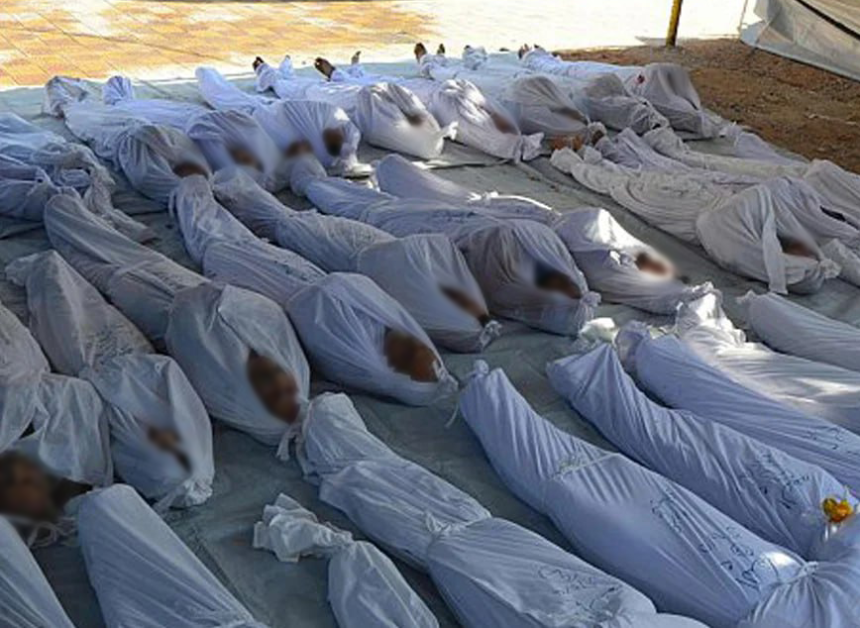
"VAN" (International Desk - 23.08.2026) :: Thirteen years after the sarin attack on Eastern and Western Ghouta on August 21, 2013, Syria’s chemical weapons file is entering a new phase, increasingly linking international investigations and accumulated evidence with national efforts to pursue accountability.
For years, the case remained caught between international investigations, UN resolutions and attempts by the ousted regime to deny responsibility. Following its fall, the file is being approached through international cooperation, preserved evidence and emerging national justice mechanisms.
On August 21, 2013, the ousted regime carried out a large-scale sarin attack on Eastern and Western Ghouta, one of the deadliest chemical weapons attacks of the Syrian revolution .
The Syrian Network for Human Rights documented 1,144 deaths, including 99 children and 194 women, and around 5,935 injuries.
The attack triggered intense international pressure. Syria joined the Chemical Weapons Convention in September 2013, opening the way for the dismantling of its declared chemical weapons program under international supervision.
Beginning in 2014, the Organization for the Prohibition of Chemical Weapons (OPCW) reviewed Syria’s declaration and identified gaps and inconsistencies, while its mechanisms continued investigating chemical weapons use.
Syria’s Permanent Representative to the OPCW Mohamad Katoub told SANA that international investigations established the ousted regime’s responsibility for several chemical attacks, including Khan Sheikhoun, Kafr Zeita, Ltamenah and Douma.
He noted, however, that no international investigation was specifically mandated to identify the perpetrators of the August 2013 Ghouta attack, while French judicial authorities have investigated the case and issued arrest warrants for several senior figures of the ousted regime.
In 2023, the OPCW Investigation and Identification Team found reasonable grounds to believe that the ousted regime’s air force carried out the April 2018 Douma attack, dropping two cylinders containing chlorine onto residential buildings and killing at least 43 people.
Cooperation between the Syrian government and the OPCW expanded after the fall of the ousted regime. In September 2025, the organization said Syrian authorities had provided information on more than 100 sites potentially linked to chemical weapons activities, in addition to 26 previously declared sites.
The International Criminal Court has not been able to exercise direct jurisdiction over crimes committed in Syria because Syria is not a party to the Rome Statute, while a 2014 attempt to refer the Syrian situation to the court through the UN Security Council failed.
International accountability efforts nevertheless continued through other mechanisms, including international investigations and universal jurisdiction, allowing national courts in several European countries to pursue suspects accused of international crimes committed in Syria.
In France, judicial authorities issued an arrest warrant in 2024 for ousted regime head Bashar al-Assad over allegations of complicity in crimes against humanity linked to the August 2013 chemical attacks.
The fall of the ousted regime on December 8, 2024, fundamentally changed the environment surrounding the chemical weapons file.
In February 2025, OPCW Director-General Fernando Arias visited Damascus and met President Ahmad al-Sharaa and Foreign Minister Asaad Hassan al-Shaibani. A month later, al-Shaibani attended an OPCW Executive Council meeting in The Hague and reaffirmed Syria’s commitment to dismantling remnants of the former chemical weapons program and pursuing justice for victims.
In March 2026, Syria’s Permanent Representative to the United Nations Ibrahim Olabi said authorities had facilitated visits to more than 25 suspected sites, provided access to more than 10,000 official records and documents, and enabled OPCW teams to interview 19 witnesses.
In May, the OPCW announced the discovery of undeclared chemical weapons, related materials, equipment and documents during inspections conducted with Syrian government support. In July, its Executive Council restored Syria’s rights and privileges, which had been suspended in 2021.
The file has also begun moving from international documentation toward practical accountability measures inside Syria.
Katoub said Syria was working to establish mechanisms allowing evidence collected by international investigative bodies to be shared with Syrian judicial authorities.
Syrian authorities announced the arrest of Maj. Gen. Adnan Abboud Halwa in April 2026 over his alleged role in the 2013 Ghouta chemical attack.
Brig. Gen. Khardal Ahmad Dioub was arrested in May after authorities said investigators established his involvement in chemical attacks and his alleged contribution to logistical coordination for attacks on Eastern Ghouta.
In July, the Interior Ministry announced the arrest of Col. Ahmad Habib Ali, identified by authorities as one of those involved in chemical weapons manufacturing through the Scientific Studies and Research Center.
Katoub said Syrian investigations were making progress in reconstructing the ousted regime’s chemical weapons program, including its chain of command and institutional structure, while authorities were seeking international partnerships to pursue suspects who had left the country.
Thirteen years after the Ghouta attack, evidence preserved by activists and rights groups, findings from international investigations and the work of Syrian institutions are beginning to converge.
The current phase is increasingly focused on identifying who ordered and carried out chemical attacks, who concealed evidence and who can ultimately be held accountable through judicial mechanisms.
For victims of Ghouta and other chemical attacks, the process is intended to preserve their rights, prevent impunity and help ensure such crimes are not repeated.
Cr-SANA
Responses
Leave your comment