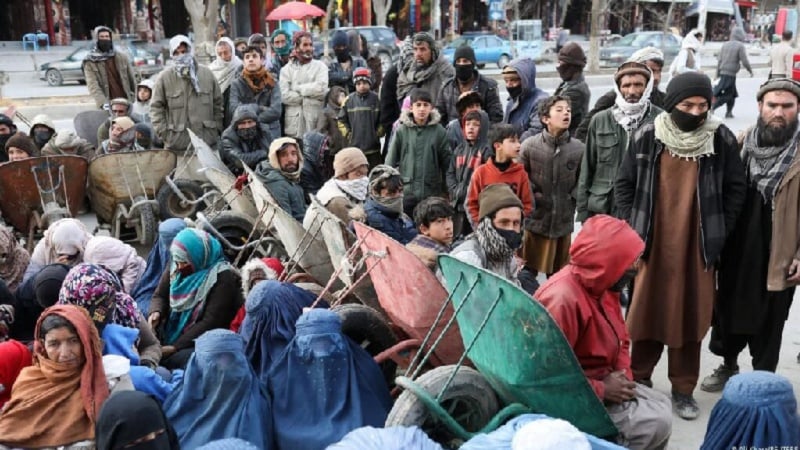
~ Afghanistan is ranked among the world’s most insecure countries, with political instability, economic hardship, humanitarian crises, and restricted opportunities for women driving widespread migration and insecurity.
"VAN" (Afghanistan Bureau - 28.12.2025) :: An international research institute has named Afghanistan as one of the six most insecure countries in the world. Following Afghanistan, Yemen, the Democratic Republic of Congo, Sudan, Russia, and war-torn Ukraine were also identified among the least secure nations globally.
The Institute for Economics and Peace (IEP) noted that although armed conflicts have decreased since the Taliban returned to power, poor governance, humanitarian crises, and political instability continue to fuel insecurity. Security in Afghanistan, the report emphasizes, is not limited to armed clashes.
Data released on Saturday, December 27, show Afghanistan as the least secure country in South Asia. Factors such as widespread access to weapons by unaccountable groups, rising violent crime, political instability, and large-scale internal and external migration place the country at the bottom of global peace rankings.
According to the IEP, Afghanistan under Taliban rule ranks 158 out of 163 countries worldwide in terms of human security and peace. The report also notes that Afghanistan and Ukraine bear the highest economic costs of violence, exceeding 40 percent of their GDP.
The Global Peace Index, published annually by the Institute for Economics and Peace, identifies Iceland, Ireland, New Zealand, Australia, and Switzerland as the world’s most peaceful countries, highlighting the importance of political stability, economic security, and social cohesion.
The report defines insecurity beyond armed conflicts, assessing social safety, internal and external tensions, and the degree of state militarization. True peace, according to the IEP, requires social, political, and economic stability, not just the absence of fighting.
Access to essential services is also a key indicator of social peace. Afghanistan’s health system is under severe strain due to declining foreign aid, with the World Health Organization reporting that 80 percent of its services were reduced this year because of budget shortfalls.
Afghanistan is also among the top four countries generating international refugees. By mid-2024, more than half of all registered refugees at the UN High Commissioner for Refugees came from Afghanistan, Syria, Ukraine, and Venezuela.
Despite the end of active conflict between the Taliban and Afghanistan’s former government, lack of economic opportunities, fear of Taliban enforcement, and restrictions on women’s education and employment have pushed many citizens to migrate abroad. These conditions undermine social and economic security for families.
Ongoing tensions between the Taliban and neighbouring countries such as Iran and Pakistan have led to mass expulsions of Afghan migrants. International organizations warn that Afghanistan’s current infrastructure and public services cannot accommodate the returning populations, increasing humanitarian and environmental pressures.
Cr - KP
Responses
Leave your comment