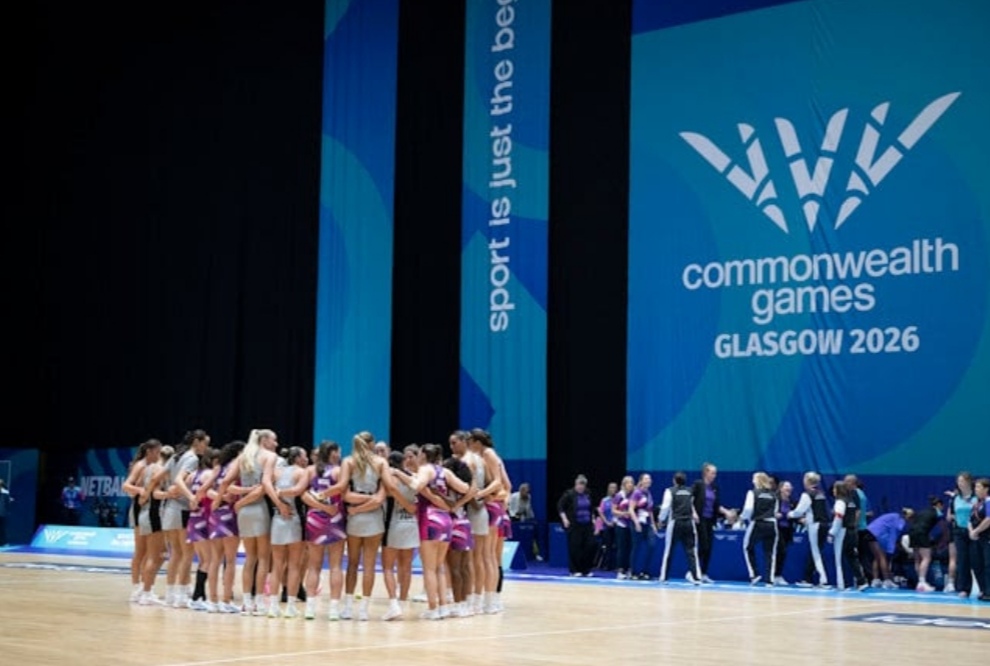
~ 11 days of competition with 1,168 medals across 215 medal events, in 10 sports and six Para sports
~ More than 630,000 people have engaged with the Games through live sport in venues, live sites and the Glasgow 2026 Festival
~ Over 4,000 volunteers gave 156,110 hours of their time
~ Games’ social media channels received nearly half a billion views
~ Independent report praises new vision of the Games
"VAN" (Sports Desk - 03.08.2026) :: A new independent report has found that the Glasgow 2026 Commonwealth Games has established ‘a proof of concept for the future of the Commonwealth Sport Movement’ ensuring upcoming editions of the event, as the curtain falls on the 23rd edition of the Games.
Over 11 days of competition, world-class athletes from 74 nations and territories competed across 10 sports for 1,168 medals in 215 medal events. More than 630,000 people have engaged with the Games through venues, live sites and the Glasgow 2026 Festival [1], over 4,000 volunteers gave 156,110 hours of their time, with the Games’ social media channels alone drawing nearly half a billion views.
The interim report praised the Games, for delivering ‘the fastest turnaround in the history of major international sport,’ which ‘didn’t simply deliver a Commonwealth Games, it sought to demonstrate a new way of hosting.’
Entitled The Story So Far, the paper is part of an independent evaluation commissioned by Commonwealth Sport and the Glasgow 2026 Organising Company, in partnership with The Bulb and the Centre for Culture, Sport and Events at the University of the West of Scotland, to assess the social, environmental and economic outcomes of the Games.
Tracked against the four key principles of Glasgow 2026's Story of Change - a Greener Games, a more Inclusive Games, a Welcoming Games and a Financially Responsible Games - the report draws on data gathered before and during the Games, with a fuller evaluation due later in 2026.
Staged entirely across existing venues within an eight-mile footprint and with new privately funded model, the Games delivered the largest integrated Para sport programme in Commonwealth Games history, with a record-breaking 47 Para sport events completed across six sports. In a groundbreaking move, the very first medal event of the Games was a Para sport event, with Team England’s Mark Swan making history as he claimed Para Powerlifting gold.
Pauline Wilson, Commonwealth champion in Para Bowls who knows the difference that integrated competition can make said: "In the Commonwealth Games, we're there at the same time, we're mingling with each other, we're training with each other. It's good for the sport and it just shows everybody how inclusive bowls is – it doesn't matter what your ability is."
Team Wales Chef De Mission Gethin Jones said "The Opening Ceremony lifted the lid on something truly special. These Games have demonstrated what can be achieved when people come together with a shared purpose. Collaboration, commitment and a collective belief in delivering something special have made this possible."
From flying police boxes to a giant Nessie, disco bowls to choreographed cleaners, and the emblem of the Glasgow Rose shining above the Clyde on the Finnieston Crane, these Games bore testament to the ‘Clyde built’ hallmark that won the city its formidable reputation, in sport, art and industry around the world.
Batons carved from the city’s fallen trees were carried around the world, and artists told the city’s story along the banks of its famous river. Medals nodded to the city’s coat of arms and were embossed in braille, celebrated in an exhibition at the Glasgow School of Art.
From east to west, fans embraced every aspect of these Games in their droves, creating a Glasgow roar which echoed from Tollcross to Scotstoun and gave athletes more than medals to take home. And Finnie, the Glasgow 2026 mascot imagined by the children and young people of Glasgow, made new friends around every corner and in every school across the city.
Thousands of volunteer ‘Legends’ travelled from across the country to play a key role in the Games, with volunteers ranging from 16 to 96 years old. The Organising Company’s Leading Women programme also brought together more than 900 women across 21 events to champion female leadership in sport.
Sustainability was also at the heart of the Games model, with Glasgow 2026 making the most of what already exists rather than building new. Every one of the Games' venues sat within a compact eight-mile radius and 100% of competition venues ran on renewable energy from the Scottish Grid. The Games achieved ISO 20121 certification, the international standard for sustainable event management, embedded across planning and delivery from day one.
Sustainability commitments also included 59% of food offerings across Games menus being vegetarian or plant-based, with over 90% of temporary overlay structures were hired and returned for reuse, and 99,401 recycled plastic bottles were repurposed into venue banners.
The Games also secured the first ever electrified vehicle partner in Games history, BYD, with 71% of Games transportation hybrid or electric, with 63% fully electric.
As Official Energy and Utilities Principal Partner, EDF powered three of the Games' iconic venues - EDF Scotstoun Stadium, the Glasgow International Arena and Tollcross International Swimming Centre - with around 5.38GWh of 100% traceable renewable electricity, enough to power approximately 2,000 average UK homes for a year.
Working with the Royal Commonwealth Society, the King's Baton Relay set out to help prevent one million pieces of plastic reaching the ocean - and exceeded it, with 1,019,554 pieces collected through 111 clean-ups across 188 locations, powered by 14,304 volunteers.
Glasgow 2026 has fundamentally changed the way major Games integrate with host cities. The All In programme invited communities, schools, sports clubs and businesses across Scotland to share in the Games brand and spirit, attracting more than 750 organisations. Glasgow Life's Festival Fund awarded 161 grants across all 23 wards of the city for community-led events, with a further £2.2 million from National Lottery Awards for All Scotland, supporting 110 Games-inspired arts, sport and community projects nationwide.
Glasgow 2026 Ltd will be dissolved by the end of 2026, with the Games’ current projected privately-funded spend being £162.6 million [3] - a fraction of both the £543 million spent at Glasgow 2014 and the £680 million spent at Birmingham 2022. The city benefited from a £4.7 million spend on venue upgrades including a new track and replacement pitch at Scotstoun Stadium and upgrading of Tollcross International Swimming Pool.
In a major Games first, Glasgow 2026 was delivered in around 18 months with a team of around 400 staff working to a redefined delivery concept supported by delivery partners including Trivandi, People, Progress Productions, MiH Major Events and Riedel.
The model’s credibility is already reflected in the Commonwealth Movement's confidence with seven nations expressing interest in hosting future Commonwealth Games and Amdavad, India, confirmed as host of the Centenary Games in 2030; citing Glasgow 2026 as inspiration for a smarter, more sustainable approach to major event delivery.
Glasgow 2026 Chief Executive Phil Batty OBE said: “This report shows the early evidence of what a reimagined Games model can achieve, and the belief we have instilled in Games future.”
“There’s been great praise for what we have achieved over the last 11 days, across the sport, major event and Commonwealth communities for what we have achieved in Glasgow. We have delivered a Games to be proud of and one that will shape the future of Commonwealth Sport. It has amplified everything that is brilliant about Glasgow and Scotland.
“It has been built on belief and a city brave enough to step forward, that believes in a Games worth fighting for and believes that all major events can be delivered differently. Glasgow reminded the world why these Games matter and in doing so changed the game for what comes next.
“Our greatest legacy is not simply what happened here, but what now feels possible elsewhere; a smarter, more sustainable and more accessible model that puts major events within reach of every city and nation with the ambition to host them.
“We have delivered a Games that is rooted in the spirit of our host city and nation. Glasgow 2026 gave people permission to believe again – in the city, in the Commonwealth Games, and in the idea that the world’s great sporting moments can belong to everyone.”
Katie Sadleir CNZM, Chief Executive, Commonwealth Sport said: "The 2026 Games was a bridge to the Commonwealth Games of tomorrow – an exciting first step in our journey to reset and redefine The Games as a truly collaborative, flexible and sustainable model for the future that minimises costs, reduces the environmental footprint, and enhances social impact – in doing so increasing the scope of countries capable of hosting!"
Responses
Leave your comment